How to Inject Peptides
Complete guide to subcutaneous peptide injection: reconstitution, technique, storage, and safety protocols.
Important Safety Notice
This guide is for educational purposes. Most peptides discussed are not FDA-approved for human use and are sold as research chemicals. Self-injection carries real risks including infection, contamination, and incorrect dosing.
If you choose to use peptides, working with a knowledgeable healthcare provider is strongly recommended.
1. Required Supplies
Before you begin, gather all necessary supplies. Using proper materials is essential for safety and effectiveness.
Essential Items
- Peptide vial (lyophilized powder)
- Bacteriostatic water (BAC water)
- Insulin syringes (29-31 gauge, 1/2" needle)
- Alcohol prep pads
- Sharps disposal container
Recommended
- Clean work surface
- Good lighting
- Timer or clock
- Dose tracking log
Why insulin syringes? Their fine gauge (29-31G) minimizes pain, and the 1/2" length is perfect for subcutaneous depth. Units marked in 0.01ml increments allow precise dosing.
2. How to Reconstitute Peptides
Peptides typically arrive as a lyophilized (freeze-dried) powder. You must reconstitute them with bacteriostatic water before use.
Calculate your dilution
Decide how much BAC water to add. Common approach: add 1ml to a 5mg vial = 5mg/ml (or 500mcg per 0.1ml). This makes dosing math easier.
Draw bacteriostatic water
Using a new syringe, draw your calculated amount of BAC water. Clean the BAC water vial stopper with alcohol first.
Add water to peptide vial
Clean the peptide vial stopper with alcohol. Insert needle and slowly release the water along the inside wall of the vial, NOT directly onto the powder. The powder is fragile.
Let it dissolve
Allow the peptide to dissolve naturally. This may take 5-15 minutes. You can gently swirl the vial, but NEVER shake, this can damage the peptide.
Inspect and store
The solution should be clear. If cloudy or containing particles, do not use. Refrigerate immediately at 36-46°F (2-8°C).
Never use regular sterile water. It lacks the benzyl alcohol preservative, meaning bacteria can grow and the solution must be used immediately. Bacteriostatic water allows multi-dose use over 4-6 weeks.
3. Subcutaneous Injection Technique
Most peptides are injected subcutaneously (under the skin, into the fat layer). This is simpler and less painful than intramuscular injection.
Wash your hands thoroughly
Use soap and water for at least 20 seconds. Dry with a clean towel.
Draw your dose
Clean the peptide vial stopper with alcohol. Draw air equal to your dose into the syringe, inject air into vial, then draw your dose. Remove air bubbles by tapping the syringe and pushing them out.
Prepare the injection site
Clean the chosen site with an alcohol swab. Let it dry completely (about 30 seconds). Wet alcohol stings.
Pinch and inject
Pinch a fold of skin between thumb and forefinger. Insert the needle at a 45-90 degree angle (90° for more body fat, 45° for leaner areas). Insert smoothly and fully.
Inject slowly
Push the plunger slowly and steadily. Rushing can cause discomfort. After injecting, wait 5-10 seconds before withdrawing.
Withdraw and apply pressure
Pull the needle straight out. Apply light pressure with a clean cotton ball or swab. Don't rub, this can spread the peptide and cause bruising.
Dispose safely
Immediately place the used needle in a sharps container. Never recap needles. Never reuse syringes.
4. Injection Site Rotation
Rotating injection sites prevents tissue damage, scarring, and ensures consistent absorption.
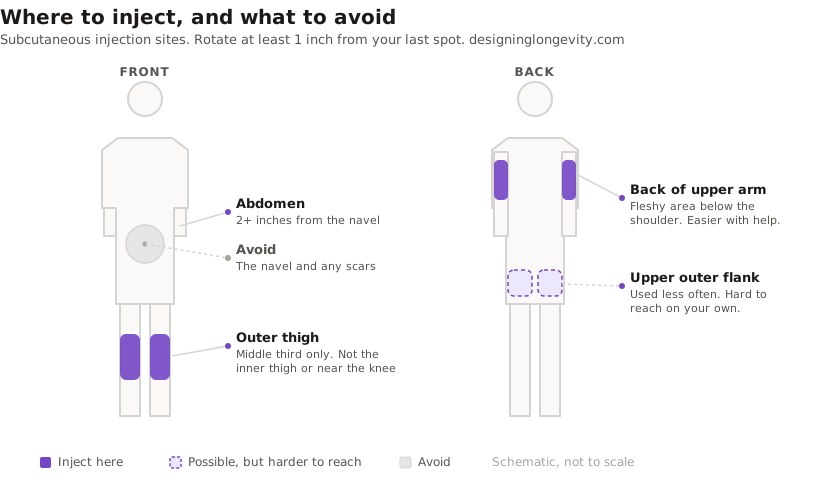
Abdomen
2+ inches from belly button. Most common site with good absorption.
Tip: Avoid the area directly around the navel and any scars.
Front of Thighs
Middle third of the outer thigh. Easy to reach and see.
Tip: Avoid the inner thigh and knee area.
Back of Upper Arms
Fleshy area below the shoulder. May need assistance.
Tip: Pinch the skin well if you have less body fat here.
Rotation pattern: Move at least 1 inch from your previous injection site. Many people use a clockwise pattern around the abdomen, or alternate between left and right thighs on different days.
5. Proper Storage
Unreconstituted (Powder)
- • Store in freezer or refrigerator
- • Protect from light
- • Stable for months to years
- • Keep in original packaging
Reconstituted (Liquid)
- • Refrigerate at 36-46°F (2-8°C)
- • Never freeze
- • Use within 4-6 weeks
- • Protect from light
Signs of degradation: Cloudiness, particles, unusual color, or strange smell. If you notice any of these, discard the vial, degraded peptides may be ineffective or unsafe.
6. Troubleshooting & Tips
Injection site pain or redness
Mild redness is normal. If severe, spreading, or accompanied by fever, seek medical attention. Ensure alcohol is dry before injecting.
Bruising after injection
Apply light pressure after withdrawing needle. Don't rub the site. Bruising is usually harmless but indicates you may have nicked a small blood vessel.
Air bubbles in syringe
Tap the syringe to move bubbles to the top, then push them out. Small bubbles in subcutaneous injections aren't dangerous but can affect dose accuracy.
Peptide won't dissolve
Give it more time (up to 30 minutes). Gently swirl, never shake. If it still won't dissolve, the peptide may be degraded.
Peptide leaks after injection
Wait longer (10 seconds) after injecting before removing needle. Inject more slowly. A small amount of leakage is normal.
Frequently Asked Questions
Where is the best place to inject peptides?
The most common injection sites for subcutaneous peptide injections are: the abdomen (2 inches from the belly button), the front of the thighs, and the back of the upper arms. Rotate between these sites to prevent tissue damage and ensure consistent absorption.
How do I reconstitute peptide powder?
To reconstitute peptides: 1) Add bacteriostatic water slowly along the vial wall (not directly onto the powder), 2) Let it dissolve naturally without shaking, 3) Gently swirl if needed, 4) Refrigerate after reconstitution. Common dilutions are 1-2ml of BAC water per vial, depending on desired concentration.
What needle size should I use for peptide injections?
For subcutaneous peptide injections, use insulin syringes with 29-31 gauge needles, typically 1/2 inch (12.7mm) in length. These thin needles minimize pain and are appropriate for the shallow subcutaneous injection depth required.
How long do reconstituted peptides last?
When properly stored in a refrigerator at 36-46°F (2-8°C), reconstituted peptides with bacteriostatic water typically last 4-6 weeks. Some more stable peptides may last longer. Never freeze reconstituted peptides, and discard if you notice cloudiness or particles.
Should peptides be injected on an empty stomach?
It depends on the peptide. Growth hormone secretagogues (like Ipamorelin, CJC-1295) are typically injected on an empty stomach or before bed for optimal GH release. BPC-157 and TB-500 can be taken with or without food. GLP-1 peptides are taken regardless of meals. Check specific guidelines for your peptide.
What is bacteriostatic water and why is it used?
Bacteriostatic water is sterile water containing 0.9% benzyl alcohol, which inhibits bacterial growth. It's essential for reconstituting peptides because it allows the solution to remain stable and safe for multiple uses over weeks. Regular sterile water lacks preservatives and must be used immediately.
Continue Learning
Disclaimer: This guide is for educational purposes only. Most peptides are not FDA-approved for human use and are sold as research chemicals. Self-injection carries risks including infection and incorrect dosing. Always consult with a healthcare provider before using any peptides.